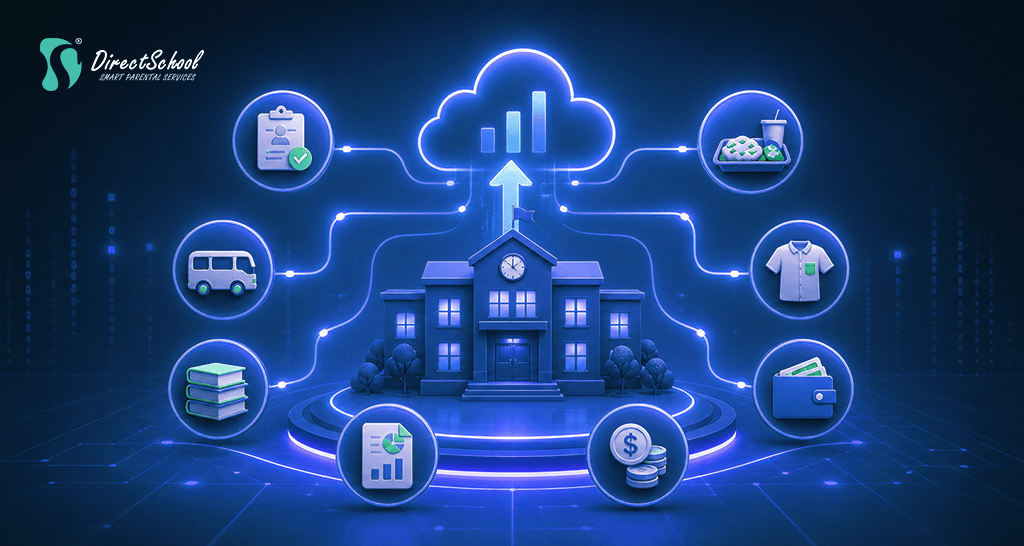
How to Choose the Best School Management System for Your School in 2026
In today’s fast-changing educational landscape, technology has become an essential part of successful school management. Traditional administrative methods are no longer enough for schools that want to improve efficiency, enhance communication, and deliver a modern educational experience.
This is why thousands of educational institutions are now searching for the best School Management System to streamline daily operations, manage student data, improve parent communication, and support digital transformation.
Whether you run a private school, international academy, language school, or educational institution, choosing the right school management software can significantly improve your school’s performance and reputation.
But with so many platforms and ERP systems available, one important question remains:
How do you choose the best school management system for your school?
In this comprehensive guide, you will learn everything you need to know about choosing the ideal school ERP system, including the essential features, benefits, mistakes to avoid, and how modern school management software can help your institution grow in 2026 and beyond.
What Is a School Management System?
A School Management System is a digital platform designed to help schools manage academic, administrative, and financial operations from one centralized system.
It automates daily tasks and improves communication between administrators, teachers, students, and parents.
A modern school ERP system usually includes:
Student information management
Online student registration
Attendance tracking
Timetable management
Exams and grading
Fee and finance management
Parent communication tools
Human resources management
Learning management integration
Mobile applications
It is also commonly referred to as:
School ERP System
School Administration Software
School Management Software
Educational ERP Platform
Why Schools Need a Modern School Management System
Educational institutions today face increasing pressure to provide faster services, better communication, and improved academic performance.
A modern school management platform helps schools achieve all of these goals efficiently.
Improve Administrative Efficiency
Manual paperwork and spreadsheets consume valuable time and often lead to errors. A school ERP system automates repetitive tasks and organizes operations professionally.
Save Time and Resources
Administrators and teachers can complete daily tasks more quickly, including attendance tracking, report generation, and communication.
Enhance Parent Communication
Parents now expect real-time updates about attendance, grades, homework, and school announcements.
Centralize Data Management
All school records are securely stored in one system for easier access and better organization.
Support Digital Transformation
Educational technology is becoming a necessity, not a luxury. A school management system is the foundation of digital transformation in education.
How to Choose the Best School Management System
Selecting the right platform requires careful planning. The best system for one school may not work for another.
Here are the most important factors to consider before choosing a school management solution.
1. Ease of Use
One of the most critical features of any school management software is user-friendliness.
The platform should be:
Simple and intuitive
Easy for teachers and administrators to learn
Accessible for parents and students
Designed with a clean interface
A complicated system can reduce productivity and create resistance among staff members.
2. Online Student Registration
A modern school management system should include an online student admission and registration module.
This feature helps schools:
Simplify admissions
Reduce paperwork
Speed up enrollment processes
Improve parent experience
Increase student registrations
Digital registration systems also improve the school’s professional image.
3. Attendance Management
Attendance tracking is one of the core functions of school ERP systems.
The platform should support:
Student attendance
Teacher attendance
Absence reports
Late arrival tracking
Automatic notifications for parents
Real-time attendance monitoring improves accountability and communication.
4. Exam and Grade Management
A strong school management system should simplify academic evaluation.
Key features include:
Grade entry
Exam scheduling
Automated report cards
Academic performance analysis
Student progress tracking
These tools help teachers and administrators make better educational decisions.
5. Parent Communication System
Effective communication between schools and parents is essential for student success.
The system should provide:
Instant messaging
Push notifications
Parent portals
School announcements
Mobile app communication
Improved communication increases parent satisfaction and trust.
6. Financial and Fee Management
Managing tuition fees manually can create confusion and errors.
A professional school ERP should include:
Tuition tracking
Installment management
Invoice generation
Financial reports
Payment reminders
Online payment integration
This improves financial transparency and operational efficiency.
7. Learning Management Integration
Modern education increasingly relies on digital learning tools.
Your school management system should support:
Virtual classrooms
Homework uploads
Online exams
Learning materials
Student performance analytics
Integration with LMS platforms is now an important competitive advantage.
8. Data Security and Privacy
School systems store highly sensitive information about students, staff, and finances.
Choose a platform that provides:
Data encryption
Role-based permissions
Secure cloud hosting
Automatic backups
Cybersecurity protection
Data security should always be a top priority.
9. Cloud-Based vs On-Premise Systems
Schools usually choose between cloud-based and locally hosted systems.
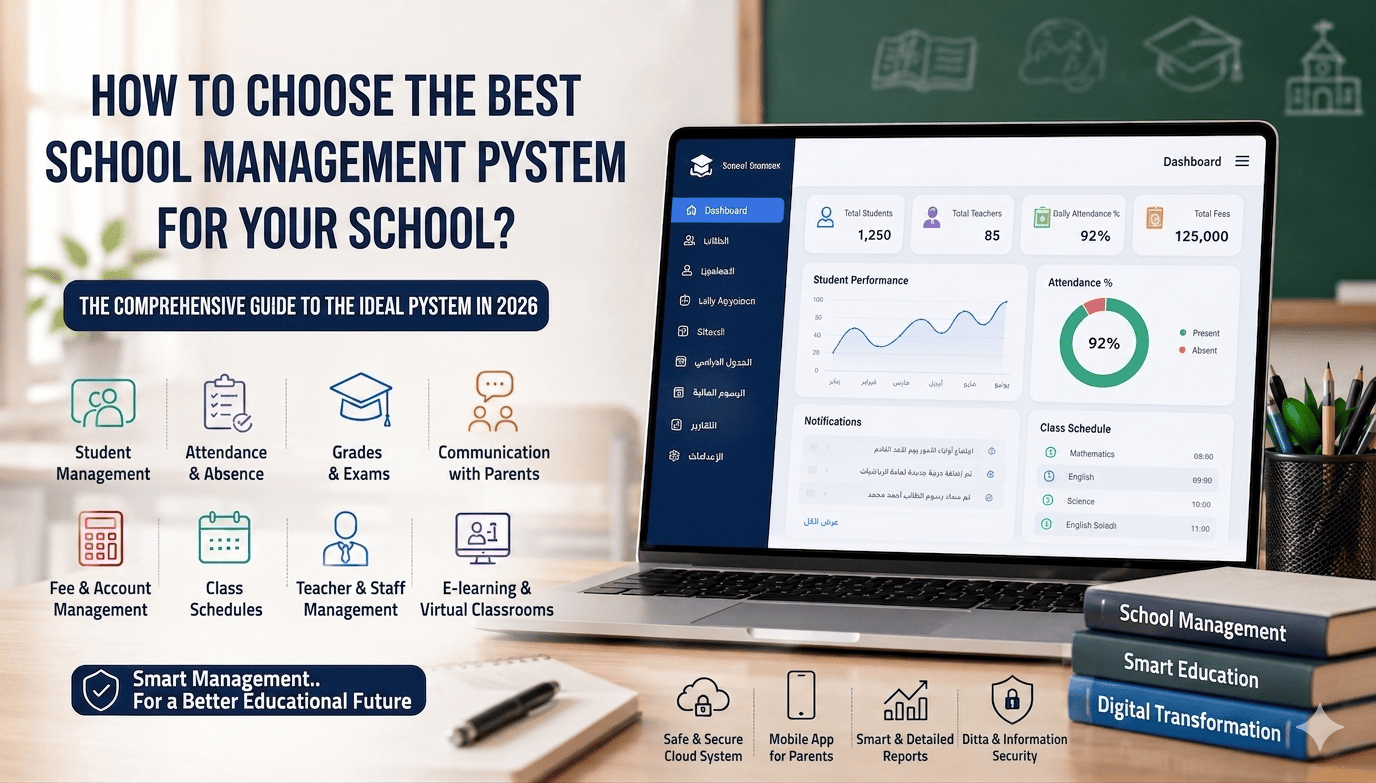
Cloud-Based School Management Systems
These systems operate online and can be accessed from anywhere.
Advantages:
Lower infrastructure costs
Automatic updates
Remote accessibility
Better scalability
Faster deployment
Most modern schools prefer cloud-based ERP systems because of their flexibility and affordability.
On-Premise School Systems
These systems are installed directly on the school’s local servers.
Advantages:
Full control over infrastructure
Internal data hosting
However, they usually require higher maintenance costs and IT support.
10. Scalability and Flexibility
As your school grows, your software should grow with it.
The ideal system must support:
Additional students
Multiple branches
New academic programs
Increased data volume
A scalable platform prevents future migration challenges.
Essential Features of the Best School Management Software
When comparing different school ERP systems, look for the following essential features:
Centralized Dashboard
Provides administrators with complete visibility over school operations.
Mobile Applications
Allows parents, teachers, and students to access information anytime.
Smart Reporting Tools
Generate analytics and performance insights for better decision-making.
Multi-Language Support
Especially important for international schools.
Timetable Management
Simplifies class scheduling and teacher allocation.
Human Resource Management
Tracks teacher performance, payroll, and staff records.
Integration Capabilities
Supports integration with payment gateways, LMS platforms, and communication tools.
Common Mistakes When Choosing a School Management System
Many schools make costly mistakes during the selection process.
Choosing Based on Price Alone
The cheapest system is not always the best solution.
Ignoring School Requirements
Every institution has unique operational needs.
Skipping the Free Demo
Always request a trial before purchasing.
Overlooking Technical Support
Reliable customer support is essential for long-term success.
How School ERP Systems Increase School Revenue
A school management platform is not only an administrative tool — it can also improve profitability.
Reduce Operational Costs
Automation minimizes paperwork and administrative workload.
Increase Parent Satisfaction
Satisfied parents are more likely to recommend the school to others.
Improve Enrollment Processes
Faster admissions can increase student registrations.
Enhance School Reputation
Modern technology strengthens your school’s professional image.
School Management System vs School ERP
Although the terms are often used interchangeably, there is a slight difference.
School Management System
Focuses mainly on educational and administrative tasks.
School ERP System
Provides a complete enterprise-level solution including:
Accounting
HR management
Inventory
Transportation
Academic management
Learning systems
ERP solutions are usually ideal for larger educational institutions.
Why Small Schools Also Need School Management Software
Even small schools can benefit significantly from digital management systems.
Advantages include:
Organized student records
Better communication
Easier fee management
Improved productivity
Professional operations
Today, many providers offer affordable packages designed specifically for smaller institutions.
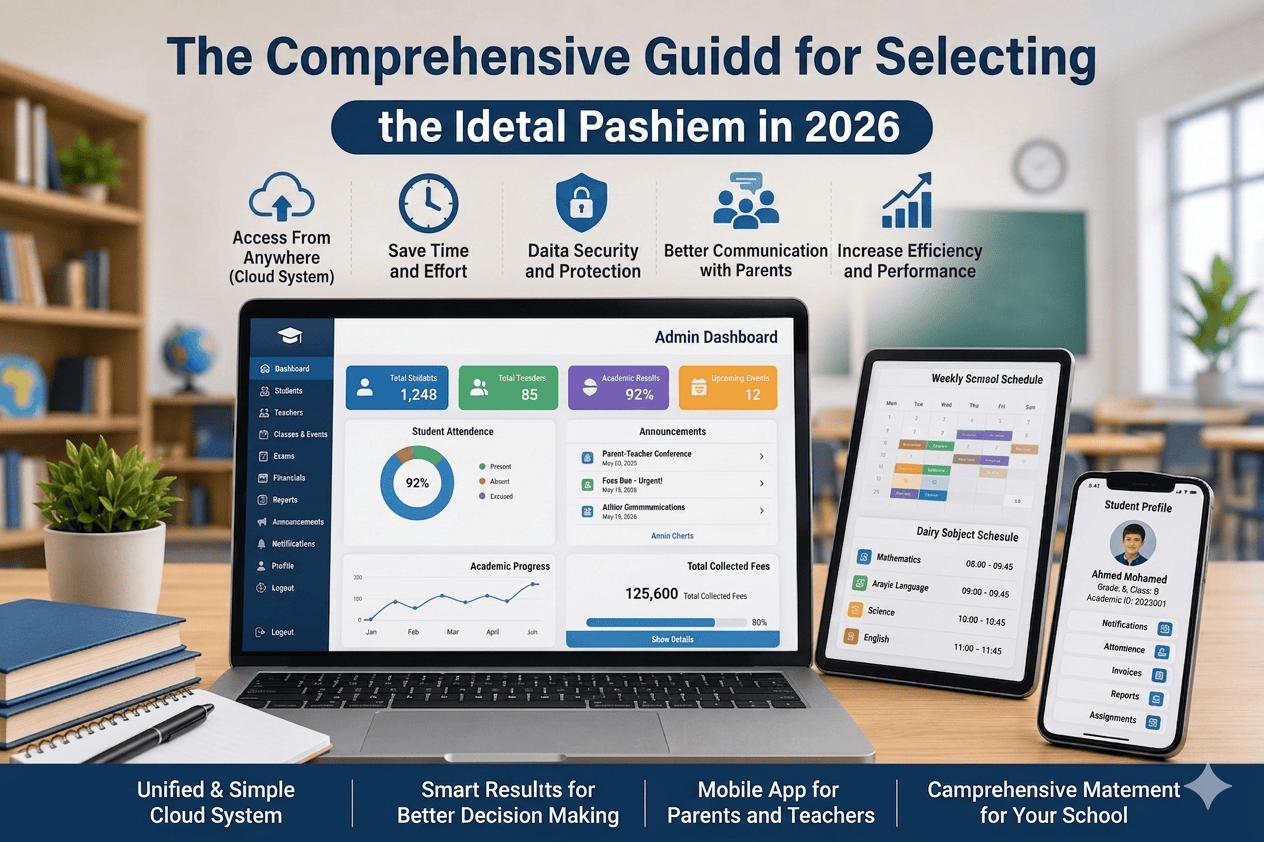
The Impact of School Management Systems on Parent Experience
Parents increasingly expect schools to offer digital convenience.
A school ERP system allows parents to:
Monitor attendance
View grades
Pay fees online
Receive school updates
Communicate with teachers
This strengthens trust between families and schools.
The Future of School Management Systems in 2026
Educational technology is evolving rapidly.
Future school ERP trends include:
Artificial Intelligence
AI-powered analytics for predicting student performance and improving learning outcomes.
Advanced Data Analytics
Helping schools make smarter operational decisions.
Mobile-First Platforms
Improved accessibility for parents and staff.
Full Automation
Reducing manual administrative tasks even further.
What Makes the Best School Management System?
The best school management software should offer:
Easy-to-use interface
Strong technical support
Cloud-based accessibility
Mobile applications
Smart reporting
Financial management tools
Online registration
Attendance tracking
Parent communication portals
High-level security
Tips Before Buying a School ERP System
Request a Free Trial
Testing the platform helps determine if it fits your school’s needs.
Involve Your Staff
Teachers and administrators should participate in the decision-making process.
Evaluate Customer Support
Fast and responsive support is critical.
Read Customer Reviews
Learn from other schools’ experiences.
Choose a Future-Proof System
Invest in scalable software that can adapt to future growth.
How School Management Software Supports Digital Transformation
Digital transformation is no longer optional in modern education.
School ERP systems help institutions:
Eliminate paperwork
Automate workflows
Improve communication
Simplify data access
Increase operational efficiency
Schools that adopt digital solutions gain a strong competitive advantage.
Why Cloud-Based School ERP Systems Are Dominating the Market
Cloud technology has become the preferred choice for educational institutions because it offers:
Access from anywhere
Lower IT costs
Automatic updates
Better security
Greater flexibility
This is why most schools are now moving toward cloud-based school management systems.
Frequently Asked Questions
What is the best school management system?
The best system depends on your school’s size, goals, and operational requirements.
Can parents use the system from mobile phones?
Yes, most modern systems offer mobile applications for parents and students.
Is cloud-based school software secure?
Yes, reputable providers use advanced security and encryption technologies.
Is school management software suitable for small schools?
Absolutely. Many systems are designed specifically for small and medium-sized schools.
Can school ERP systems integrate with e-learning platforms?
Yes, most modern systems support LMS and virtual learning integrations.
Conclusion
Choosing the best school management system is one of the most important decisions for any educational institution in 2026.
The right platform can help your school:
Improve operational efficiency
Save time and resources
Enhance parent satisfaction
Streamline administration
Support digital transformation
Improve academic performance
Before making your final decision, carefully evaluate your school’s needs, compare features, test the software, and ensure reliable technical support.
As educational technology continues to evolve, schools that invest in modern school ERP systems today will be better prepared for the future of education tomorrow.